Pause

Pause, breath

Meditation

Forms, precepts

Present moment

Thought without thinker

Not thinking about thought

Letting go

Pain

This too will pass

Embracing all things and conditions

Is the flag moving or is the wind moving?

No, the mind is moving.

Body

Mind

Mind-Body

Suchness, mind to Mind

Impermanence, not self, suffering

Emptiness

Empty of what?

Empty of self

Form=emptiness

What a concept

Nirvana

Buddha, Dharma, Sangha

Wisdom

A good, friend, a teacher

Breath

Mindfulness

Breathe in the evil, breathe out good

Loving Kindness, Equanimity, Sympathetic Joy, Compassion

Sensation, plus or minus

Perceptions morph to concepts

Formations make intentions, plus or minus

Reading Sutras

Copying Sutras

Night Meditation

In the demon cave at Black Mountain

Tea time with the demons.

Honey or sugar?

Cream or lemon?

This is not mine. This is not myself. This is not who I am.

Who am I?

Who?

Am

.

Being

Be

The Hard Edge of Impermanence

In these days of turmoil, change seems more tangible than ever.  It is in the air. The war in Ukraine, COVID and global climate change come to mind.  One has to question the fundamental nature or purpose of our world, where a nuclear holocaust could be triggered by just one individual, where vaccination inequality and stupidity prolong a pandemic, or where myopic economic goals are likely to result in a horrific environmental future.  There are many facets to these kinds of traumatic events, including different time scales on how they impact or might impact individuals and society at large.  When you are on the direct receiving end, prevention is too late and it is simply an act to stay alive and if possible to thrive later.  For those not directly impacted (for the time being) it is a question of how to respond healthily to these horrific and often overwhelming.  And how does it work in a spiritual practice? Reacting, by placing blame, or hating, does not seem to be the answer, as it will likely lead to further fractionation and tribalism. The source of this world’s woes is rooted  in time immemorial —  dancing  waves of different amplitudes and varying source vectors, interfering and interacting with each other, sometimes creating the “perfect” storm. 

What I call the hard edge of impermanence are those events that push us to a very uncomfortable place, and sometimes to our limits.   There are a couple of classic and useful spiritual books  on coping at times of maximum stress.  These are Pema Chodron’s book, When Things Fall Apart and Tara Brach’s Radical Acceptance.  I highly recommend these reads.  If read and then abandoned  on a shelf, they are just more “self help” books, but both contain much wisdom and are potential vehicles for positive change, if the teaching is practiced.  They offer tools to work with emotions and potentially destructive feelings.

Both books have a core message:  Don’t be so hard on yourself and accept life with a softness. Why? Because we are products of our conditioning from time immemorial, physically and mentally. Many things are simply beyond our control and we fail to see the interconnection of life through tunnel vision of an ego, a “little self.”    By opening up to our self-judgment, feelings of unworthiness, or to our horrible situations– by embracing them with stark honesty, we are instructed that we can not only lessen the grip of the particular hard situation, but we can also unfold to the world with compassion and loving kindness.  Both authors emphasize that by ending the mental struggle we can throw off self identification with our suffering, anger and other negative emotions, which in turn tills the  ground for growth of wholesome actions.  These actions, if undertaken by enough of us, or even just that right person, can literally prevent wars and much unnecessary human suffering. There is the story about  a Tibetan yogi, Milarepa, who invites the demons of delusion in and realizes that they are simply mental constructs (see Inviting the Demon).  But even after making peace with the demons there is still the matter of the mystery of existence. In Buddhism it is called beginners mind or great doubt (nice piece by Zen master Boshan). 

Humans are continuously trying to make sense of the world, either consciously or unconsciously.  Despite advances in tool technology,  the universe is still about 95% unknown, many aspects only inferred, and labeled as dark energy and dark matter;  the term, dark, meaning unknown. Why does the world offer both cruelty and beauty?  Creation and destruction, positive and negative, are fundamental forces.  There is birth and death, not just of sentient beings but of whole planets, suns and even galaxies, not to mention perhaps the whole known universe.  For the world of matter, as we know it, and existence, as we experience it, would not be possible without both creation and destruction.  This life would also not be possible without change and without time and space.  Maybe the ancient Hindus got it spot on with Brahma the creator, Vishnu the preserver, and Shiva the destroyer.  Is this creation and destruction just a signature feature of a cold and indifferent world? But then again, this is an amazing and rare planet teeming with life and offering many beautiful sights.  In night satellite view urban lighting marks the earth’s landscape. Harder to see are the flashes — little sparks of goodness, kindness and compassion that many people around the world exhibit.  That counts a lot.

Life right now seems to be a test for many of us, and I as well, feel located at a crossroad.  This is a point between the old deluded self, who was not so kind and a different self, leaning toward acknowledging the possibility of the basic goodness of all life, in a world that often seems to go against that grain. I am uncomfortable  using the term spiritual warrior, but let’s face it, our egos kick our butts most of the time. It takes resolve and courage, and help from others, working together, to persist and to face our demons and hard situations.  

It used to be that all I wanted in my spiritual practice was to gain self realization, also called awakening or enlightenment.  While an aspiration for solving this great matter goes hand in hand with the spiritual journey, the present work, and only work available at this moment, is right here and now on this planet, using one’s body and one’s actions —not striving for some conceived happy place. It is about making  wholesome choices that soften the hard edge of impermanence for oneself and thus, others.  This is the path of the Bodhisattva. There are many good people on this earth that don’t necessarily have an active spiritual practice, yet in essence they too are bodhisattvas when they act out of kindness for others and the planet.  My practice does not make me special.

In the Heart Sutra it states that emptiness, also called sunyata, equates to form.  All that ethereal magic of emptiness is, in essence, the reason why we cannot think ourselves to enlightenment.  Spiritual work is a messy and often difficult undertaking. We are so aptly reminded of this by one of Dogen’s (Soto Zen founder) most often used phrases: “skin, flesh bones, and marrow.” He calls these things mind, but then he also calls them for just what they are.  In Rinzai Zen practice, there are a number of koans where the student does not “get it right,” and at that point they are reprimanded with a sharp pull on the nose by the master.   Sometimes we need a sharp pull on our noses to get back to the path and be kinder to ourselves and each other, especially under adversity.

Zen and Football

From ancient times it has been common practice for those with a way seeking mind, or on the path to enlightenment, to drop worldly pursuits and become a “home leaver.”  In this way, by living a simple life in a monastery, or alone in nature, one might be able to lessen the impact of the annoying cobwebs of every-day distractions and focus on the essential matter.  The clatter and materialism of our current age certainly presents cobwebs.  Perhaps in western culture, the time leading up to Christmas and New Years is the culmination, or crescendo, of this “external” noise or distraction which most of us take to be our ordinary lives.  If you are a football fan, this is also the time of year when college and professional teams edge toward championship games, with the ubiquitous college bowl games providing a smorgasbord of “entertainment” for fans.  If you are not a home leaver, how can you still pursue the Way, and live with football? 

Football. Doesn’t seem like a mystical or Zen pursuit.  Does it?  This mystic has been following football for about ten years now, in particular the Oregon Ducks.  How did it start? Simple (hah!). Both my daughters attended school at the University of Oregon, and over time it seemed like the thing to do.  I could simply say that I am intoxicated watching football and that it is all a  bad thing, but that would not be the whole story or accurate as a matter of fact.

Later, I will  list some very negative things about football, but then I can list many negative things about our world, society and less than desirable behavior of many human beings.  Rather than simply say, that one should not watch football (in excess) the point will be made that being a football fan is like anything else if one approaches the experience with mindfulness. 

Football.  It’s a lot of different things.  Aside, from being an oddly shaped ball traditionally made of pigskin (now cowhide), the American game of football evolved from a combination of rugby and soccer, with the first football game played in 1869.  I could get technical in describing the game but please just refer to the wiki for the description, Here.  So, the game of football evolved from something else.  It is transitory and impermanent.  The players come and go.  The coaches come and go.  Teams wane and wax in superiority.  Football is impermanent. 

Further, football is a many splendid thing.  It is  very different thing being in the head and body of a running back (the guy carrying the football through giant opposing players) as he fights his way down the field, vs. being a green skinned and yellow haired fan in the bleachers yelling his or her heart out.  OK, this mystic does not paint himself green, but my pulse accelerates and my blood pressure increases when watching critical plays.  I watch most games on the TV, so here we have another aspect of football.  What we watch is captured by a digital camera and is essentially a huge amount of data that is then manipulated further and sent digitally through space to satellites and eventually streamed to ones TV set.  Our set itself “decodes” these signals which are then represented as tiny dots on the screen which in turn are then interpreted by our brains and through pre-established patterns we watch and experience “football.”  Football is more than impermanent; it is also empty of a separate and unique identity and is just another aspect of “dharma” or phenomenon in flux.  It’s also football.

I used to think that the quarterback, the guy passing or handing off the football, was the smartest guy on the team.   Recently , along came the admission by a well-known pro football quarterback, who had just tested positive for COVID, that he had chosen not to be vaccinated and was indeed taking an anti-parasitic drug, not proven to be affective against COVID, as a preventative treatment.  Needless to say, maybe football quarterbacks have different smarts.  This leads to the odd behavior of football fans being true to certain teams and players.  In the pros for example, if we don’t like the quarterback, whether he is vaccinated or not, included, we may dislike that team.  It also goes for traditional rivalries between teams.  In a way, football has many aspects of tribalism.  Being a football fan is mostly a mental thing.  While the player may be in top physical health and in a “Zen” mental zone of mindfulness, the fan’s physical and mental state can be all over the spectrum.  I find that Zen and football are much more compatible when I can be aware of my mental/emotional states, bodily states and the game with as much detail as possible.  The goal is to be detached from the outcome and simply experience the game.  This is not an easy thing, and probably not optimal as a Zen practice, but nevertheless football is part of existence, like anything else and thus fair game as a tool to stay on the path that is no path. 

I think the game, overall, provides a lot of enjoyment for many people.  Additionally it is important economically.  Probably the most negative aspect of the game is the potential for injury, including long term brain trauma.  While the institutions have improved safety and new rules/better helmets/better protocols initiated, perhaps the game is still too violent and dangerous.  It is up to the players, coaches, universities, professional team owners and most of all the fans,  to unite for safety improvements and steer the direction of how football will be played in the future. Another negative aspects is the big money in college ball, whose arena essentially serves the function of a minor league or nursery for future professional  players.  One can argue that society at large is totally mislead and that the money generated from football revenue can be spent more on academics rather than coaches salary or equipment, including fancy uniforms.  A item, that almost seems like a disease, is the necessity of a college team to feel like they need to win the national championship, at all costs. Schools now do cutthroat recruiting for the best high school players with the best teams, having the highest paid coaches, getting those players.  Ultimately, certain schools and leagues become dominant and the game, overall, fades in “integrity” as winning becomes everything and losing teams get their coaches fired.

So, sometimes I feel that I am standing at the entrance to the dragon’s lair.  But there are moments when that ball is magically spiraling toward the end zone and the receiver makes a beautiful one-handed catch and manages to keep both feet in the end zone — that moment is special.  The moment of victory is special as is the moment and agony of defeat .  It is just a moment.  The pure enjoyment of football, friends, food and talk on a crisp fall day is all part of what existence has to offer.  It’s when we go into the Demon Cave on Black Mountain (the delusion of the world which we are trying to escape from– for further perspective see dharma talk by Judith Ragir:  Here) that football can become painful.  After all, the game fans enjoy is their own experience and by making it something more than it really is, and projecting our conceived selves into the fray, we can become lost and unhappy.  Be happy for your team, win or lose. It all changes and appears very complicated but in the end is simple — otherwise if you put your desire for winning or disappointment in loosing on a pedestal, back to the Demon Cave you go.   Football is not football.  That is why we call it football.  

Science and Spiritual Inquiry Two Sides of the Same Coin?

Comparing the scientific method, with its premise of objectivity, to the process of spiritual inquiry, examining our consciousness, is a bit analogous to comparing a gold coin and virtual crypto currency.  Scientists themselves also raise questions with regard to “consciousness” within nature and creation itself.  But really, might these processes be two sides of the same coin? How could scientific discoveries and the history of science not be compatible with spiritual inquiry? In the end the key may lie within the two sided coin itself.  This is not so much a philosophical talk about reality, nor does it delve far into metaphysics, but if one wants to go down that wormhole, check out the Wiki article on Reality as time and interest permit.

This talk is inspired by the reading of two very different texts.  The first was written in 2021 by the well-know physicist Michio Kaku and is called the The God Equation.  The second book is a Buddhist sutra, which was already in written form around 500 AD, translated by Red Pine (2012), called the Lankavatara Sutra.

Kaku’s book is largely a summary of major discoveries in physics, from pre-Newton to Einstein’s work, Quantum theory,  cosmology and a plug for the as yet unproven String Theory or its cousin, M-Theory.  It is also about the fundamental forces.  He systematically describes historical discoveries and the hypothesis-proofs and emphasizes that the various scientific breakthroughs  have technological counterparts, namely devices and systems that have improved or benefited humanity.  Physicists speak a special language, one of mathematics.  Kaku notes that all fundamental equations can be placed on  one page.  Those equations are an expression of  the very fabric of what humans have discovered about the physical world.  The book’s final chapter is entitled Finding Meaning in the Universe.  Kaku’s quest, like Einstein’s, Hawking’s and others has been about a theory of everything.  One final equation to connect all the other equations — “one ring to rule them all.”  Unfortunately this has not yet been achieved, perhaps due to not having the physical tools to test the theories.

Kaku implies that this potential theory of everything equation might be called the God Equation, but also says that  the meaning of the Universe includes the quest. He suggests an intelligence in the universe based on the brevity, symmetry and beauty of the currently completed basic equations.  He writes: “The Universe is a remarkably beautiful, ordered, and simple place [!].  I find it utterly staggering that all the known laws of the physical universe can be summarized on a single sheet of paper.  Given the utter brevity of this sheet of paper, it is hard to avoid the conclusion that this was all planned in advance, that is elegant design shows the hand of a cosmic designer. To me this is the strongest argument for the existence of God.

Hawking, who did not believe in a God, described a possible perpetual “creation” in his “space-time-foam” model where there is a  foam of tiny bubble universes continually popping up and disappearing back into the vacuum. Each bubble is much tinier than an atom, but once in a while, one of these bubble does not disappear back into the vacuum but continues to expand, until it inflates and creates an entire universe.  For myself, while this could be a mechanism for “creating” universes , it does not sound appealing or complete.  Kaku asks, “If all physical laws could be explained by the theory of everything, then where did that equation come from?”  This is where we turn to the Lankavatara Sutra.

Buddhist Sutras are said to represent the teachings of  Buddha.  The  basic premise of Buddhist teachings is that words can only point the way and that the essence of the teachings is ineffable. Words are then used skillfully to point the way. 

I have to remind myself, again and again, that enlightened beings don’t fall into the category of the kind of consciousness most of us live in.  It is easy to read sutras and then immediately place the information into “our box,” our limited way of seeing the Universe, rather than allowing the words to point toward an as-of-yet barely known place.

The Lankavatara Sutra’s primary teaching is that the external world may be viewed as nothing other than a projection of our minds, leading to perceptions and concepts, creating a separate self that either clings to or is repulsed by these projections and fabrications.  The bottom line in the sutra is that the external world neither exists or not exists.  This sounds a lot like Quantum theory where quantum particles pop in and out of existence.  Maybe the gap between the two worlds has narrowed just a little bit as theories such as quantum mechanics are proven, and the box where we place things gets a bit clearer.

But what is the skillful teaching of the Lankavatara Sutra for one with a way seeking mind?  In previous blogs I have talked about the  the brain as a model and one can easily conclude that what a human being perceives is truly mind stuff, a model, a simulation of stuff that seems to be “out there.”   This stuff is mysterious but science slowly is making sense out if it, albeit through the limited consciousness of human beings.   This interesting piece on noumenon argues that despite the mind stuff aspect of reality, science works.  In my opinion there seems to be a lot of hype that Buddhism and Zen, particularly, negate existence of an “external world,” at least within everyday life.  Keep in mind that the Lankavatara Sutra was written largely “pre-science.”  The “progress” of humanity, including science and technology, are nothing but part of the overall process of evolution.  We can see a much more than in 500 AD. 

So, Science has to objectify the world (and leave the mind stuff aspects of consciousness largely to others) and there are real results, breakthroughs and applications.  But the Lankavatara Sutra says that nothing exists outside of Mind and for that matter nothing does not exist either.  Back in the Buddha’s time he broke down “physical” things to four elements, namely earth, air, water and fire.  He never denied that these things “were.”  It is obvious that different states of consciousness exist as in the chant, “fire heats, wind moves, water wets and earth is solid.”  But the skill of the Lankavatara Sutra lies in explaining that the essence of beings (we humans in this case) is non-physical.  Then again tell a doctor performing surgery on you!  Two sides of the same coin?  And the real problem lies in that we think, as we live our lives on this planet, that we are a separate and permanent self (aspects of space and time);  thus we continue to  grasp and cling at this physical stuff which we can’t wrap our heads around and that so often slip through our fingers, causing us grief and sadness.

The ancient Chinese Zen Master, Huangbo said : “That Nature [absolute truth or Thusness] and your perception of it are one. You cannot use it to see something over and above itself. That Nature and your hearing of it are one. You cannot use it to hear something over and above itself. If you form a concept of the true nature of anything as being visible or audible, you allow a dharma of distinction to arise. Let me repeat that the perceived cannot perceive. Can there, I ask you, be a head attached to the crown of your head?”

Thus, we live in a place where science co-exists with the absolute.  The two sides of the coin seem to be quite different, yet even Zen masters eat rice.  Attempts to resolve the absolute into equations leads to discoveries and it is a slow, step by step process. That is the world we live in, or shall I say, that is the world we simulate and manipulate through our minds. It is really both, since there is empirical evidence of the forces of nature all around us, yet it is only through our minds that it becomes truly alive.  The Zen teaching of form and emptiness being interchangeable may be applied here by substituting the word Mind for emptiness.  By Mind with a capital M I refer to what the Buddha and Zen masters call the big Mind.  It is the other side of the coin and in that place there is no existence nor no non-existence.  Meanwhile we continue to live with our little minds and once in a while, through mindfulness, meditation, interactions with like-minded people,  “good” and “bad” life events, and just everyday life, catch glimpses of Mind.  Mind is the ineffable non-physical “suchness” that is the well-head for such things as love, poetry, kindness, evil and the source for a unifying equation representing the theory of everything, that perhaps someday humans will prove.  I think that this equation will reflect the expansive flux of the Universe,  the incredible fluid flow of change, and the ineffable beauty that  accompanies this emptiness. It will be music. The equation will be our true Selves.

Buddhist Believe in God — They Just Don’t Know It

Buddhism, Zen, Religion, Faith, Christianity, Heavens and Hells

This is rather a presumptuous title and perhaps stepping into the quicksand of religion, but please take it as a Zen koan and perhaps as a stab at humor.  And one more thing, Buddhists are not a homogenous bunch and this article is not meant in any way to suggest what any one particular Buddhist person or Buddhist school  thinks or believes.  What we know is that the physical Buddha, Shakyamuni, lived about 500 BCE, after which time at least three major schools of Buddhism arose.  This happened after Shakymuni, near his death, is reportedly to have asked that no leader be chosen to lead anything like a school.  Ah, humans — but it was a  good thing!   A nice and not too long short history of Buddhist schools, from the World History Encyclopedia is available here.  I am writing this piece after having studied the  Lotus Sutra  and various other Mahayana Buddhist Wisdom Sutras.  These are some seminal scriptures within the Mahayana tradition, where the physical Buddha is clearly portrayed also as a cosmic Buddha, beyond space and time and  an omniscience, all-knowing,  presence with all beings as his “children” — which sounds to me a lot like God.  Thus the discussion, which has to circle around belief, religion and faith. 

One might argue that the fundamental issue that drives one to grapple with the  concept of God is simply the desire to know who and what one is.  The inexplicable nature of existence naturally pushes one for an explanation, a higher power, being, or as sometimes called in Zen, the Truth.  Now, there are different approaches that one may incorporates into one’s  life to assuage  this “not knowing.”  The most common one, and really nothing to do with religion is that we all have a world view which we use to navigate life and in essence always search for meaning and purpose.  This world view does not spring from a vacuum  but rather is developed by the individual as he/she matures from an infant to an adult .  As there are a myriad permutations and environmental factors, it is safe to say that world views differ a lot from individual  to individual and culture to culture — shaped by  everything ranging from family influence to education and accepted societal norms or for that matter extremes.  After all, “no man [being] is an island.”

Beliefs seem to steer us in this life, whether they be like the individual world view or a set of religious beliefs, which of course comingle with our worldview.  Matter of fact, without beliefs, which hopefully stem from curiosity, we can wither, become fearful and draw into ourselves. 

For most cultures and societies there is the availability of what I will call here “organized religion.”   My late brother, after a rather raucous youth and a drug-filled first part of life became an evangelical Christian.  He told me point blank that his faith was wrapped up in the Bible.  He said he had to take the Bible literally, otherwise there would always be questions, and no firm foundation for faith.  This seems to shed light on the difference between a belief and faith, as beliefs can change, but faith is, or should be, steadfast.   For a good segment of U.S. society (currently about half of the U.S. population per the latest Gallup poll) choosing a house of worship, be it a Church, Synagogue or Mosque, is the preferred route.  This involves faith in the teaching and faith in a God — a higher power and supreme being/creator that one may petition through prayer.  In turn, the overall concept is that if one follows God’s teachings and is “good” than one will be rewarded here on earth, and if not here on earth then certainly in heaven.  It seems that the threat of a hell is there, at least for Christians and perhaps in a more complicated way form Muslims and Jews.  

Two fundamental aspects of organized religion appear to be a belief/faith, or simple acceptance, of scripture that must be obeyed for best utility and a belief/faith in a creator that need not be questioned as to authenticity.  Before circling back to Buddhism here is one comment stemming from the above, based on Thomas Merton’s book, Mystics and Zen Masters.  Merton was a Trappist monk and has been called one of the great spiritual thinkers of the twentieth century.  Merton encouraged openly questioning Existence and God’s creation.  He pointed out that Zen has the same questioning and openness to finding Truth that mystical Christianity (mostly lost in contemporary Christianity) has.  The role of Christian contemplation is fleshed out and it seems similar to meditation.  Similarly, in his hybrid “religion” the Indian Guru Yogananda often talked of prayer and meditation as the two ends of the telephone, namely talking to God and listening to God.  There is a lot to this listening, in my opinion. 

The point of this writing is not to criticize what I call organized religion.  Believe me, I have tried to accept Jesus and it has not happen.  So many of my fellow Buddhist practitioners  at the Zen center have followed a similar path and ended up being Buddhists.  Now, the irony is that Buddhism is very much an organized religion.  At the Soto Zen Center,  if one walks in for the first time, not knowing anything about what’s going on, it looks a lot like church with religious, ritual, practices.  Zen as a tradition with monks and lay people following forms and rituals goes back to about the sixth center C.E. with Chinese Ch’an or  Zen, and later Soto Zen, an evolved form of Ch’an, founded in Japan in the 13th century.    In a formal Soto Zen temple, there is meditation, formal opportunity to talk with a priest about spiritual matters (closest analogy is Catholic confession) bowing, chanting, recitation of the names of the ancestors, special ceremonies like Buddha’s Birthday, or Segaki ( an opportunity to examine and hopefully say goodbye to our hungry ghosts) and of course talks (a bit like sermons).   The priests wear robes and many lay practitioners  wear robes.  Now, at least in the U.S. there are more “secular, ” experimental Zen centers that do not carry as many forms and rituals and some people are more comfortable with that.  With regard to forms and rituals, the biggest reason for having them is to teach mindfulness, awareness as being non-dual, and to form a cohesive non-selfish and compassionate community of practice that can enter the temple and find a supportive and familiar container for spiritual work.  One thing about bowing — it is meant to teach humility, get us out of our egos and edge toward non-duality, as explained by Zen Master Shunryu Suzuki.  With that said, forms and rituals can set many would-be meditators and spiritual inquirers on edge.

So do Buddhists believe in God?  They certainly don’t do not believe in God and I suspect there are few true atheists among the group.  The historical Shakyamuni Buddha was silent on metaphysical issues and focused on the practical aspects of relieving people’s suffering.  He would use the analogy of a person shot with an arrow asking questions about the shooter and type of arrow, rather than getting medical attention.   An excellent piece on Buddhism and Metaphysics from learnreligions.com  explains how Buddhism aims to allow the individual to examine reality for oneself and ultimately, through releasing ones suffering, directly experiencing it.   Here it states [the Buddha] “discouraged people from speculating, forming opinions, or accepting doctrines based on blind faith. Rather, through practice of the Path, through concentration and ethical conduct, one directly perceives the nature of reality.”  Reality is also called direct experience and some Buddhist literature calls it the Truth and even some call it God.  I think what separates Buddhism from directly theistic religions is that Buddhism relies on the individual, the practitioner, to do the “heavy lifting” as aided by cohorts, teachers, and scripture.  

Buddhists have heavens and hells and they have gods, but not one ultimate Creator.  A lot of the Buddhist mythology was carried forward from Vedantic and Hindu influences.  Chinese and Japanese additions came later.  What probably steers Buddhists away from having the necessity of an ultimate deity are found in two fundamental Buddhist teachings, namely  dependent co-arising and emptiness.  The link to dependent co-arising, here is quite extensive, but the basic idea is that (quote by Thich Nhat Hahn)  “…everything arises in dependence upon multiple causes and conditions; nothing exists as a singular, independent entity.”  Emptiness, in my view is kind of the flip side of dependent co-arising in that all things are empty, namely they are empty of a separate sole existence or self, in other words they depend on everything else in the universe.  Emptiness is Form Manifested (see the article on the mother of all wisdom, here) and for that matter form is emptiness manifested.  Together these concepts paint existence within form as a constant state of flux. 

But then again, in the Lotus Sutra, the Buddha calls all sentient beings as his children, and there are some Buddhists that literally worship the Lotus Sutra.   Buddhists are people and this seems like a people thing.  Mahayana Buddhists chant the names of the Buddhas and bow to the Bodhisattvas that protect their places of worship.  In the Lotus Sutra it says, essentially, that we are all Buddhas  or have the potential to become a Buddha — a fully enlightened being.  So, paradoxically, knowing the self, which is but “flux,” is knowing and being a Buddha who is all knowing and very much god-like, beyond form and duality, much like the Hindu god Brahma. 

The third definition of the term, “belief,”  by Merriam Webster is my preferred one:

3  : conviction of the truth of some statement or the reality of some being or phenomenon especially when based on examination of evidence;  belief in the validity of scientific statements

So, science notes that at the quantum level all matter has characteristics of a wave and at the same time of a particle.  How can that be?  Sounds a lot like dependent co-arising and emptiness.  The interchangeability of form and emptiness and matter being both a  wave and a particle are certainly both paradoxical.   We are form and we are energy, and much more.  And there appears to be  a strange link between the-human mind and quantum physics phenomena.

The evidence of a higher Truth comes with our own transformation into a kinder, loving, compassionate, joyful and equanimous person that is more apt to extend a positive vibe to others and the world.  Love, compassion, and joy (and the ability to see the beautiful and positive side of beings and existence) do not seem to have a basis in objective science based physical reality, yet they are the one ingredient that seems essential for making life worth living.  In meditation, I can at times perceive  the fog of self attachment and past karma lift, and what is left is a wholesome loving feeling,  a positive energy field (and this is just scenery along the way, so I’m told.) Without getting further into whether God is a bearded old man, soul or no soul, heavens and hells, etc. this edging toward an ineffable Wisdom seems like the real deal.  Buddhists would not be practicing if they didn’t have a belief in something that fits a slot called God.

Thinking

Introduction

In his instructions on how to sit in Zen meditation or zazen , titled Fukanzazengi, the 13th century Buddhist monk, Eihei Dogen, stated “Think of not-thinking. How do you think of not-thinking? Nonthinking.  This in itself is the essential art of zazen. ”  How ironic that thought is like a wall, but also functions as the hinges of a gate.   

In this piece I want to talk about characteristics of thought, from a number of angles and then wrap up by going back to Dogen’s instructions on how to meditate and what they might be pointing to.

Humans as sentient beings are a product of evolution and a highly advanced one at that.  First there was matter, form and shape, and then feeling, as primitive organisms bumped into each other.  As the tree of life grew, sentient beings evolved to perceive the external world, via whatever sense organs they had, and in that process created or modeled perceptions of “out there,” and eventually “in here.”  The very real seeming sense of “in here” or “I” required symbolic mental fabrication in the form of thought, that worked well with the external world model, perpetuating  a lifespan long narrative, a dichotomy, of in here and out there.   Thinking is a mark of highly evolved sentient beings, ergo humans.

One of the trademarks of humans is that we are thinkers.  It’s not that thought is inherently bad, but “excessive” thought can cause a lot of pain for ourselves and others.  Thinking keeps us alive, safe and able to make a living, as well as being a tool for creative, technical and scientific expression — not to mention a catalyst for spiritual endeavors.  When things don’t go our way though, thinking has a tendency to spin out of control and paired with negative emotions can overwhelm us and lead to destructive actions against ourselves and others.  This cycle can repeat itself and can be ingrained in our behavior, taking us and others down a long bumpy road.

The Messiness of Thinking

Our thinking can be  messy.  Here is a nice and funny piece by a Zen practitioner describing what happens on the “inside” during a silent retreat: Buddhism and the Messiness of Everyday Thinking.  If you meditate, does this sound familiar?

The challenges faced in meditation are many, such as sleepiness and physical pain, but restlessness, the  chattering brain, sometimes called the monkey mind is certainly a common complaint.   

I used to think that the phrase “I think, therefore I am” was profound, but truly the “I” in thought  is illusive.  Can you pin down the essence of your being? Are you your past self? Are you your future self? At best you are your present self, but that is always changing. As things continually change, the inevitable deduction (for me, at this point in time and space) is that there is a continuum of experience.  Call it mind-body if you will.  We are participants in a flux of experience which is an intimate mystery. 

OK, let’s look at a more objective perhaps non-spiritual aspect of thought.  We know at the biological level that thought involves electrical and chemical energy (see for example Brain Electricity and the Mind.)  within the brain. But of course, that concept of thought is kind of meaningless to most of us unless we are a neurologist.  It’s also a bit creepy imagining that all we are is simply generated from a dark gooey cranium.  This is not to ditz brain science, which in itself is advancing quickly.   The Wikipedia piece on Outline of Thought provides valuable viewpoints on thought and it’s greater realm, the human mind.  The article leads by stating that  “Thought (also called thinking) is the mental process in which beings form psychological associations and models of the world. Thinking is manipulating information, as when we form concepts, engage in problem solving, reason and make decisions. Thought, the act of thinking, produces more thoughts.

We’ve talked about brain and mind and thought.  Here is a web quote I like: “Brain and mind are not the same. Your mind is part of the invisible, transcendent world of thought, feeling, attitude, belief and imagination. … The brain is the physical organ most associated with mind and consciousness, but the mind is not confined to the brain.  (See websource )

Yup, thinking produces more thought and it is part of an invisible transcendent world. It’s an open system, as our thinking is influenced not only by our sense facilities but by our memory and from the feedback loop of our created model of the world and quite frankly — by all cumulative thoughts and actions that there ever were, period.

The brain’s electrical signals are equivalent to our mental constructs, a voice to action or a voice for creation.  These ideas (or collective thoughts) can become books, music, a technical report or a blog and really can “morph” into almost anything — like a war or the Nobel peace prize.    In turn your thought and  action can (and will) influence someone else’s thought and action.  It’s all related.  So thought has characteristics of always being in flux, being more “matrix like,” and ever changing — from electro chemical signals, to pixels on a a screen (created by someone’s thought) to fate of societies and species.  Thought is characterized by impermanence (does not stay the same) and lack of a separate unique nature (Buddhist concept of emptiness or Sunyata.)

Having a science and hydrology background I’ve always been fascinated how thought and the various turns, ups and downs, of our lives are analogous in behavior to basic physics equations, for instance the continuity equation.  In the case of fluid dynamics, and in layman’s terms, the equation says that the rate at which mass enters a system is equal to the rate at which mass leaves the system plus the accumulation of mass within the system. Substitute thought for fluid.

Thought and Time and Maybe Happiness

Many sages  have emphasized  minimizing obsession with material goods as a means to happiness (different than health and security), being curious about who we are, exhibiting compassion and morality via-à-vis  all sentient beings and the world, and developing spiritual insight  by living as much as possible in the present moment — which can offer one ease and equilibrium.   

 A common paradigm in our materialistic society for a “happy life” is to strive to make sure that the good and satisfactory in one’s life outweighs the bad and unsatisfactory.  This striving for happiness  has a pattern of projecting future actions and “if-happiness -not-achieved” spinning back in time to either wallow in misery or plan the next happiness quest.  Of course, the way the human survival biological machine works is that we learn from our past mistakes and plan for our future survival by predicting survival scenarios.  But that does not explain the incredibly stressed world of Christmas shopping, holiday traffic jams or a trip to Costco for that matter.

We are all time travelers.  Past thoughts are a “library collection”  of who we think we are, but they can include many “dark books” full of regret, anger and frustration.  As for the future, if we take the world too seriously, anxiety (fear, hatred, insecurity) can literally kill us.  Sense stimulus is one of the primary catalysts that triggers thoughts .  A car, a stranger, a smell, a noise, a food dish, or wind in your face are all apt to generate thought that either moves one into the past or the future.  Note that the actual stimulus is in the present, period.  Whatever the stimulus is, and it does include interaction with other sentient beings as well (which is even more complicated) the thought(s) that ensue are supported by your past experience as collective memory, and one’s world view — that is the model of the world you created with all that  input. This is why interacting with others can quickly go sideways when world views differ, when world views are distorted (for most of us they are) when we simply don’t listen because we are time traveling, and seemingly separate from others.   The antidote is to be present, open and accepting of others, something that meditation and spiritual training can help with.  When you are present, the past and future thinking will recede.  In the present there is simply more room to investigate, be open and interact.

Thought , Visualization, Dreams and  Thought and Emotion

Another aspect of thought is having a corresponding mental picture.  Some people think a lot more visually than others.  The same can be said about emotional response and mental visualizations  (e.g. “seeing red”.)  Further, in our sleep state we visualize; and dreams themselves may be viewed as a jumble of thoughts.  It’s all part of a continuum and dreams are as much a part of reality as anything else, and very important for mental and spiritual health (See article in Aeon.com on losing touch with our dreams.) Just as presence or mindfulness can bring stillness, so too can calming visualizations, which are another tool in the spiritual tool box for the mystic.  We seek nature for calming scenes, but they are also available inside you.  I encourage you to explore these aspects both while awake and asleep. 

Thought and stimulus elicit and perpetuate emotion.  Emotion is mostly a total body response, but very rarely is it completely bereft of thought.  I like to think of it as “thought” in the body.  Referring back to the previous discussion regarding the brain and the mind, it is helpful to view our “selves” as being both mind and body, or mind-body.   Think of colliding billiard balls.  There is a transfer of energy.  The same is true of an emotion which is triggered by stimulus or thought and then has a chance to be passed along as a response (mind to body to perhaps another body. )  Note that emotions can morph and change, like thought.  For example, regret can turn into  anger, hate or a more complex depressed state.  Lusting or craving often changes over time and can even turn into its opposite.  When it comes to reacting or not to an emotional feeling, the secret lies in creating a gap between emotion and response.  Creating that gap requires spiritual training, or maybe therapy. The choice is ultimately ours how we transfer that energy further.  From self deprecation to an angry word, to a blow, or by being kind, to ourselves and others.  Of course, sometimes bad things happen that are totally out of our control but then we can face them in the now, rather than amplifying them by time traveling.  Sometimes I meditate in the dead of night when awoken from sleep.  Initially and often I am flooded by many past thoughts and emotions, my karmic baggage.  This mystic is still in the throes of suffering, and sometimes one just has to have compassion for oneself.  Thich Nhat Hahn suggests holding those thoughts and emotions like you would kindly hold a crying child.  

Kindness and Equanimity 

A kind nature can be best developed when the storm of emotions and thoughts is seen through a lens of equanimity.  Call  it balance, peace, non-attachment (but not indifference), letting go or accepting all things and conditions.  This positive state, along with compassion, loving-kindness and sympathetic joy are kind of like a bridge or companion to non-thinking or beyond thinking.  Think about or visualize some being or place or entity that you love and that brings you joy (I focus on my French Bulldogs!)  Spend five minutes on that, and see what body feelings arise.  Unless you are the Grinch (and we all sometimes feel that way) the most likely place you will feel a response is from the chest area or heart — a warmish expansiveness.   Project some of that onto others!  The positive states can be developed by mental exercises such as just provided (for equanimity see the link) and given enough time will appear through meditation.

Mind and Non-Thinking

Huang Po was a 9th century A.D Chinese Zen Monk who is well known to have repeatedly said that one cannot think oneself to enlightenment  nor “attain it” (grasp it)  in any way.  He taught that “Mind”  is a non-dual concept, beyond all thought, phenomena or black and white. He pointed out that we are all just that one Mind and that Mind cannot seek its own Mind (no head on top of a head. ) I highly regard his teachings, as translated by John Blofeld, entitled The Zen Teachings of Huang Po, On the Transmission of Mind.  For those interested you can fine it: here.

Beyond Thinking

A key point of Dogen’s zazen instructions are to be a quiet non-judgmental and non-controlling observer of all that goes on inside and outside.  As Bob Dylan sang, ‘”I ain’t afraid of confusion ,no matter how thick.”  The coming and going of thoughts  can be likened to clouds floating by in the sky.  While “think of non-thinking”  is a good translation it is also a bit puzzling and requires curiosity.  The other translations given in the first paragraph link are “beyond–thinking” and a more descriptive one: “When thought arises, be aware of it. When you are aware of it, it will disappear. Put aside everything outside continuously, and make yourself into one piece. “

I have meditated enough in my life to experience non-thinking states.  These can offer expansiveness,  joy and peace.  While very much on the path, this mystic is convinced through initial baby steps and at times being in the company of very accomplished meditators that meditation offers a gateway to the Beyond .  But don’t be too dreamy, since Dogen also said that while we might be told that the entire universe is  a dream, “[that] dream itself is the distinctive clarity of a hundred grasses.”    Or Be in the world but not of the world…  There are some very powerful trance-like states that seasoned meditators can enter almost at will.  It is real.  The point is not to attach to those states, nor add anything on to them with thought, but to go beyond those states, curious and open, to arrive at the source of those states.  And when you are not meditating you can share insights and the effects of those positive states with your loved ones and the world.   Look for clear skies. Watch the clouds — they are part of the landscape; they come and go. Happy New Year!


Being a Mystic, Covid 19 and Racism

Maybe the rain and forecast thunderstorms here in Portland today will thin out the crowds for today’s  #BlackLivesMatter protests.  I hope not.  How does a privileged old white mystic view this, and what right do I even have to comment regarding the suffering of people as the result of  ingrained societal white privilege and supremacy?  Even the loftiest spiritual beings of history were also all very human.  They had all the same bodily functions as anyone else, they bled, they got angry (at times), they were anxious for their fellow human beings and they decomposed back into the earth in the end.  But they displayed unconditional love as well, that comes from a place beyond words.   I am saddened by our current leadership’s  inability to lead, console and unite.  In order to remedy social injustice, it is up to us to develop a good heart and translate whatever insights are gained through spiritual work into concrete action.  This is physical and mental work of listening, controlling reactivity, volunteering, donating, educating oneself and others, and speaking and thinking kindly with less self-orientation.  It’s about being with one’s own pain, and the world’s , in an honest and transparent way.

What do Covid 19 and racism have in common?  Well, at least three things.  One, both are diseases, two, we are all in this together and three, people of color as well as those below the poverty line are bearing impacts of Covid 19 disproportionately higher than those with greater privilege.

The Covid 19 pandemic and now the frustrations of seeing black men die time and time again on national television has increased the anxiety level  of Americans.  A  Zoloft shortage has been reported. Use is way up.  And even though we can act socially responsibly and not just spin wheels and grit teeth, we can’t always “fix things.”  Matter of fact one of the reasons humans act “crazy”  is that we so often, in our heads, want it only our way, and are always planning how it’s going to work out better for “me”–so we race toward that goal.  This is exhibited in many ways, from impatience in the grocery line, to reckless driving, to unhealthy consumption of all kinds, violence against others and property, to unhealthy affiliation with the left or the right.  And yes, it includes at times, at least for me, relying too much on spiritual rituals and meditation  thinking that it will fix all things in this world, which is a world forever in flux.  Even this blog is an example.   And we don’t spend enough time integrating the pain of the world and facing reality just the way it is, in order to be able to act compassionately, whether it be to a partner, stranger or an unjust  social construct.

For me, the healing and translation of anxiety into something productive and helpful begins with the Buddhist concept of Right View.  Here is a paragraph from a recent email from Dharma Rain Zen Center by abbot Kakumyo Lowe-Charde:

Right view is one of our foundations of practice.  Right view is seeing the world with an understanding through the lens of the four noble truths.  It tells us that we have a responsibility to manage our intentions and actions to reduce suffering, and that the pivotal manner in which we cause suffering is the assumption of separateness.  We are deeply conditioned to see “I, me and mine” as somehow different from the field of awareness.  When we perceive this separateness we will frame difference as conflict:  We imagine a right and a wrong, a hero and an enemy; we perceive scarcity, we hoard privilege.  This stance of separateness colludes with a violent system, and reinforces greed, anger and delusion at structural, institutional and individual levels.

Love is certainly an antidote to the perception of separateness.  I have noticed during the Covid-19 lock down, most neighbors and even people at the stores that are open,  seem kinder and more willing to acknowledge each other — there is less of “I, me and mine.”  It’s kind of like those astronauts that see our fragile planet in the distance as they journey to the moon.  Separateness just breaks down, if but for a little while.   This is hard work, not to feel so separate.   I’ll conclude with a Christian perspective:

1 John 2:9-11

 He that says he is in the light, and hates his brother, is in darkness even until now.

He that loves his brother abides in the light, and there is no occasion of stumbling in him.

But he that hates his brother is in darkness, and walks in darkness, and knows not whither he goes because that darkness has blinded his eyes.

Wisdom from a Buddhist Perspective

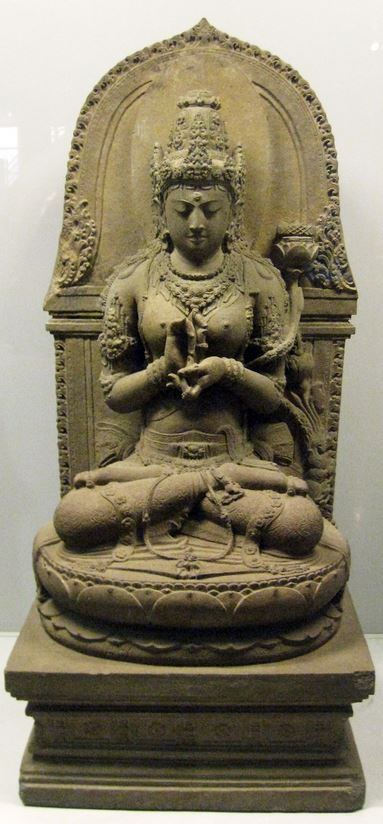
One of the early teachings of Buddhism focuses on the topic of wisdom.  In Sanskrit, the word prajna, or wisdom, is combined with the word paramita, or perfection, to give the conceptual word prajnaparamita (link is to wiki article rich in information on this topic) which loosely refers to a perfected way of seeing reality, as well as to a body of Buddhist scriptures.  Additionally this prajnaparamita is said to give birth to all buddhas, or be, the “mother of all Buddhas.”  Prajnaparamita has been depicted as a female deity, exemplified by this famous statue from Java:

Java Prajnaparamita

Why am I excited about the concept of wisdom as explained in Buddhism?  Apparently prajanparamita enables enlightenment.  The funny thing is that the term wisdom is ineffable. We really  can’t describe it, since it is non-conceptual, non-dual and transcendental.  It comes about from not being attached to what we conventionally view as “our world. ”

There were a number of “Wisdom” texts, composed roughly anywhere between 100 BCE to 500 CE.  I have read and am somewhat familiar with three of them.  If you personally want to delve into it, these are good references.   (I love the commentary and quotes in Red Pine’s books.)  They are The Perfection of Wisdom in 8000 Lines (Translation by Edward Conze, 1978), The Diamond Sutra (Translation and Commentary by Red Pine, 2001) and the Heart Sutra (Translation and Commentary by Red Pine, 2004).  Of all the texts, the Heart Sutra is the shortest, only 36 lines in Red Pine’s translation, and a distillation of the wisdom teachings.

Back to “not being attached to what we conventionally view as our world.”  Let’s first take a cursory look at what science knows about the physical world we live in.  Broadly speaking there is matter and there is energy, and E=MC2, so really the two basic ingredients of the universe are interchangeable as proportioned by a constant ratio (speed of light squared) .  So basically E=M or E-M.  Besides consisting of these two ingredients the universe can also be viewed as being chucky-jam full of information.  Information includes the laws, rules and the mechanisms that shaped and  balanced the fundamental particles created by energy after the big bang (we don’t really know what was there before).  Information includes the DNA code (and per-cursors) for sentient life — and we, ourselves, are and use/assimilate information.  Essentially, the universe is looking back on itself, through us.  We are interactive with our environment.

Now let’s move toward how we (think) we interact with the world.  Have you ever been on a virtual ride at Disney world or Universal studios?  Seems pretty real.   I mean, you sit in a chair and through visuals (light) , sounds (maybe even smells), motion and  force you are convinced that you are flying , perhaps, through space or into a black hole.  Other examples which one would conclude are illusions would be sitting in a planetarium, engrossed in a movie, or having a vivid dream (dreams use our everyday accumulated sensorial experience as building blocks) .  They are simply different states of consciousness and are phenomena, that is an “an object or aspect known through the senses rather than by thought or intuition ” (Merriam Webster).  The same dictionary provides a second definition, namely phenomenon are a temporal or spatiotemporal objects of sensory experience as distinguished from a noumenon.   A noumenon, (in Kantian philosophy) is a thing as it is in itself, as distinct from a thing as it is knowable by the senses through phenomenal attributes.  Now, here is where we take a different road.  While prajnaparamita is not something very explainable (it is practiced), some other concepts, namely the five skandhas, or aggregates, and emptiness can be more easily worked with and play an integral role in  helping explain the subject.

To be clear, it is a great misconception that Buddhism denies existence.  As His Holiness the 14th Dalai Lama has  said, “The existence of things and events is not in dispute; it is the manner in which they exist that must be clarified.”

In chapter 3 of the Diamond Sutra the Buddha says that “…no one can be called a bodhisattva [a Buddha who defers final rest in order to help others] who creates the perception of a self or who creates the perception of a being, a life or a soul.”  The key words are “creates a perception of…”  In commentary, the Chinese Buddhist scholar, Ting Fu-pao, explains that perception of a self refers to the mistaken apprehension of something that focuses within and controls the five skandhas and that a perception of a being refers to the mistaken apprehension that the combination of skandhas  creates a separate entity.

Basically, the concept of emptiness or in Sanskrit, sunyata, means that nothing exists as a sole separate self; all phenomenon are dependent on their existence or non-existence on each other.  This includes ourselves.  We are not a sole separate self, but merely an aggregate or receiving device of the five skandhas of form, feeling, perception, mental formation and consciousness.  Clearly there is something that we can perceive as energy, matter or information (all above our pay grade as to origins).   But the point is that just like in a virtual reality ride, movie, or dream, attaching to  and making a separate “self” or “being” is just another virtual reality scheme and according to Buddhist teaching not the ultimate real thing — especially since the joys in our lives, that we are attached to, and that we will eventually lose, will cause a lot of pain for us.

The Heart Sutra starts out (one translation) that an Enlightened One “…when deeply practicing prajna-paramita clearly saw that all five aggregates are empty and thus relieved all suffering.” In the Ratna or verse version of the Perfection of Wisdom in 8000 Lines at the get-go in Chapter 1 we are told that “No Wisdom can we get hold of, no highest perfection, no Bodhisattva,  no thought of enlightenment either.  When told of this, if not bewildered and in no way anxious, A Bodhisattva courses in the Well-Gone’s wisdom.”  Further in the same chapter it states that “as dharmic facts, existence and non-existence are both not real, A Bodhisattva goes forth when wisely he knows this.”  This points to emptiness of emptiness and in fact no place to stand.

The Heart Sutra, Red Pine’s translation, lines 22 – 24 read “Bodhisattvas take refuge in prajnaparamita and live without walls of the mind.  Without walls of the mind and thus without fears.”  Chinese scholar Li Wen-hui comments (Diamond Sutra, pg 182): “The mind not attached to anything is prajna.”  This takes us to the famous line in the Heart Sutra: “Form does not differ from emptiness, emptiness does not differ from form. Form itself is emptiness, emptiness itself form.”  All of the Wisdom sutras use dialectical logic of the kind similar to “A is not A, therefore we call it ‘A’.”  And how does one achieve or attain enlightenment, something that cannot be achieved or attained and literally leaves us with no place to stand?  Back to the mother of all Buddhas.

One way to look at Prajna is as intuitive insight.  This insight is the light that gives birth to all Buddhas and apparently is available to all beings.  I really like the concept of prajna, albeit just a concept in my mind, since it represents a positive and hopeful source for everyone.  It’s probably the closest thing to a god in Buddhist circles.

And how does one practice prajnaparamita?  As Red Pine points out in his commentary on the Heart Sutra “…Buddhism is better understood as a skill or an art to be practiced rather than as information or knowledge to be learned or amassed.”  In this sense, “walking the walk” includes practice of the paramitas, in the Mahayana tradition boiled down to six; namely generosity, morality, forbearance, vigor, meditation and lastly wisdom.  It is said that wisdom keeps us moving in the right direction.  A beginner on the path starts as just a human being, composed of the “earth,” with all the faults and delusions.  It’s just plain hard work replacing bad habits with good ones and staying focused on what there is without the mind running away with “it.”  And at the end of the path we are still human beings.

From the Diamond Sutra: ” ‘Tathagata,’ Subhuti, is another name for the end of dharmas.  ‘Tathagata,’ Subhuti, is another name for what never begins.  And how so? No beginning, Subhuti is the highest truth. ”  The Diamond Sutra is packed with some amazing statements in order to point toward a non-dual and unconditioned true reality that evolves in a natural and organic manner as we “practice” wisdom or prjana.  This true reality has been called the real body of the Buddha or the dharma-kaya.  It is likened to infinite space and yet no space, all-knowledge and yet no knowledge, and to both infinite space and no space and both all-knowledge and no knowledge.  My guess is that it was there before the big bang, even if “before”  has no ultimate meaning.

Finally, by saying that our common perception of the world is an illusion is in no way meant to be disrespectful of the beauty, goodness, kindness, courage, love and compassion that we find scattered in the world, as rose petals on water.  This is a mystery.  I think those aspects of our existence are a reflection of prajna as well.  If that is the case, then fear of losing ourselves by turning in the direction of wisdom should lessen.

Having Surgery (and Getting Older)

After injury or illness-induced trauma, animals in the wild have a natural ability to rest.  They seem to know when to shelter and in some cases seek out medicinal plants or minerals for survival.  It is fascinating how modern human society deals with injury or illness – we’ve come a long way, yet in the end, after treatment one is left “alone” to make his or her way back to health —  including the “mental pathway.” I am writing about my experience and insights during a recent planned surgery and post-surgical recovery period and how it relates to the spiritual journey.

 Getting Older

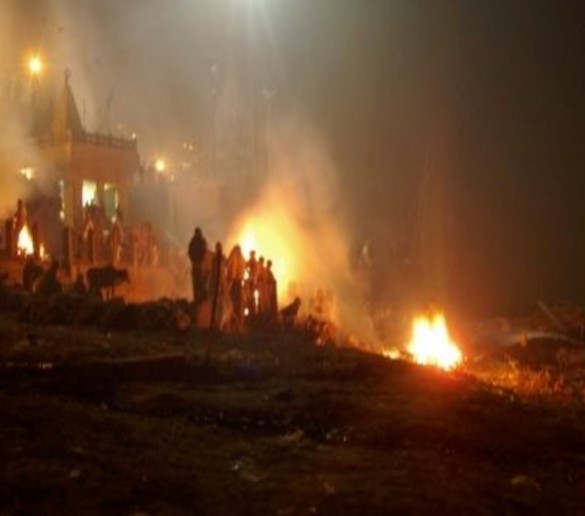
This was my first surgery, at age 69, and I was curious (not that there wasn’t trepidation).  Getting older brings us closer to the inevitabilities of life.  And, yes it is a little scary. We are of the nature to grow old, to become ill, to die,  and to lose loved ones (see link on the Five Remembrances.) The precariousness of existence should only make the life we have more precious and special, to be shared and enjoyed every day, and a body respected.  (in essence the positive aspect of the fifth remembrance –“My actions are my only true belongings. I cannot escape the consequences of my actions. My actions are the ground upon which I stand”).  A few years ago my wife and I were able to travel to India and see the burning or cremation Ghats at Varanasi (one of the world’s oldest cities).  Looking at the “face of death” is stark reality!  Quietly staring into the fires, family and acquaintances have gathered to see the body of their love-one burned, and then ashes placed in the Ganges river.  It’s believed that if one is cremated in Varanasi, and their ashes are released into the sacred and purifying water of the Ganges, their reincarnation cycle will end and they will reach Nirvana.

Varanasi 

 The Takeaways

From the surgical and in-hospital experience, followed by home recovery, here are some takeaways: 1) healthful outcomes and speed of recovery are enhanced by factors of privilege, like having the required information, assistance, shelter, support and insurance/funds; (2) when “wounded” we can act like babies or face our reality — there is a difference between self pity and a loving kindness and compassion for oneself; (3) under duress there is a tendency to project into the future, tell oneself “stories,” worry, and be a “drama queen” (maybe a male trait in this scenario)  — this is where mindfulness helps; and (4) a shock and derailing to one’s normal routine, such as triggered by surgery makes one more helpless and less powerful but in turn offers an opportunity to study the components of what we call a “self.” In the end, it is still back to the question (and answer) of what really constitutes the “essence” of existence.

As to the first takeaway:  I received good quality medical treatment and am fortunate to have and be able to afford good insurance and enjoy a wonderful home situation.   I  feel for those less fortunate who may not have a stable situation, or home environment and really can’t even afford a procedure such as mine (due to under-insurance or no insurance) or for those who have much more serious conditions (unplanned) including afflictions that require long hospital stays — and likely afterword a debt burden.  Recently I received an email from an old workmate.  She said her son had been  in the hospital for a month with a very bad leg infection (the son’s wife is disabled), lost his job, got out only to be re-admitted with a MRSA (type of staph) infection.  Eviction also happened , so they are now living in a motel with their son.  Affordable good quality healthcare and social services should be readily available to all and costs shared by society.  This should be a national priority  — and while individual karma is variable, there is also collective societal karma that speaks for itself.      

The Surgery

Trusting the surgical team is very helpful in curbing worry.  In turn, those administering services have a duty to inform and calm the patient.  The surgery, abbreviated, is called a TURP, to relieve symptoms associated with an enlarged prostate.  (If you look up the link, it is all is explained. This surgery may create panic in male persons).  Yes, any cutting of the body and intrusive procedure can create a lot of aversion and anxiety for the patient — with the mitigating factor being clear communication and focus.  Under anesthesia it’s as if you are not there.  Waking up, no problem, like a good night’s sleep.  Then you realize you are not quite free.  There are iv drip lines as well as a catheter.

Unfortunately there was quite a bit of bleeding after surgery — and it was visible for everyone to see via the catheter tube. Here come the “drama queen” part.  Anyone remember the Stones song Sister Morphine (1971), well actually a cover/adaptation from the original Sister Morphine Marianne Faithfull  (1969)?  “And you can watch all the clean white sheets stained red…”  OK, it wasn’t that bad, and no blood stained sheets, morphine or too much pain (although a lot of discomfort) — but there was a certain sense of self pity and a bit of worry.   This brings up a spiritual antidote,  the four Brahma Viharas, or positive states that describe ­a foundation or platform for spiritual stability and growth as well as a  positive platform for interaction with our environment and momentary situations.  During times of stress we can panic or have self pity or we can accept the inevitability of the current moment and have compassion and loving kindness for ourselves.  The fourth Vihara, equanimity, would be especially helpful in the situation as described — a balanced state of mind with neither clinging or aversion.  

The next morning the rate of bleeding was still unacceptable and a second surgery was performed.   While the mystery of where we reside while under anesthesia came and went, waking up was little harder.  I was fortunate to be able to go home the next day and get the catheter out a few days after that, but still very much the injured animal.

The Mental Side of it All

In the early stages of recovery there was less mental focus and a tendency for self pity. Ideally this is the time for greatest need of focus and for a positive mind state.  Then again, effects of anesthesia are basically an intoxicant and the body is in serious defense/shock mode due to the physical impacts of the “injury.”  This is why you shelter — to provide a suitable and safe environment for healing, to regain balance, stability, and a healthy mental framework.  While significant information is available in popular literature on self healing, little of it can be said to be scientifically based.  This blog has repeatedly stressed the benefits of meditation. A peaceful, positive and accepting state of mind, as developed over time by meditation can offer a stable healing platform.  A positive approach arguably works integrally with the body and the mind, after all the two are intimately linked.  Compassion for the self is OK.  There is little benefit to adding a story of woe or blame or “why me,” or what will happen. Just be with it.  Of course medicines and technical aspects of medical treatment have a great bearing on outcomes as well, but in the end it is on us to get well.

Here is a beautiful piece in Psychology Today featuring an interview with Toni Bernhard, who teaches Buddhist concepts regarding healing, primarily mental healing in the face of chronic sickness and pain.  As she states, healing and relief from the suffering of illness or injury can be facilitated by directing…”our attention to the present moment; fear is simply not there because fear resides in stories we tell ourselves about the future.”  So, this does not mean the condition goes away, simply we can develop tools to better deal with the situation in a mentally healthy way that can bring peace and equanimity.

Tip:  asking yourself “are you sure?” can often stop the mind from spinning out of control regarding a situation that simply may not be true.  This is where direct and thoughtful/reflective conversations with a physician and the care team becomes imperative.  Do the research if you can.   

Transitions

When I awoke from the second surgery and examined the situation it was clear that “I” was not the same person as who came into surgery.  This was not just the physical reality of surgery, literally having a wound, or due to the tubes into my body.  It was a mental state — that I would call (initially) less focused, or perhaps better described in that my perception of phenomenon was parsed into small pieces that were the focus of rapid and revolving observation.  This was a change in consciousness.  One of the pillars of Buddhism are the Three Marks of Existence –impermanence (aniccā), non-self (anattā) and unsatisfactoriness or suffering (dukkha) .  Being sick or recovering from a wound is very humbling and offers us a chance to closely examine these aspects, the marks, since they are said to describe the characteristics of the world we live in and the characteristics of ourselves.  One can use the experience as an insight, chalk it up as just an inconvenience and not learn a lot from it, or possibly have it be a catalyst for a downward spiral of anguish and self pity and deterioration in health.

My observations were a mosaic of everything that had created the “person” who I was, both physically and mentally.   The experience was also one of helplessness or lack of power.  Inversely the thirst for achievement is why we  celebrate our victories (of all kinds) and are often fascinated by superheroes (of our own imagination or popularized) and the concept of immortality.   This is just a human characteristic and what contributes to humanities collective achievement and motivates us in the everyday world.  Most of us fall short of the physical perfection that seems so valued or the genius category that brings great achievements, so we can either “project” (a lot) or conversely just be happy/peaceful with who we are/what we do — focus on mental health and a functional life with meaningful relationships.  For society at large, the need to self-actualize through a leader may explain the dangerous phenomenon such as Trumpism and why people follow despots.

The recovery period included times when I did tell myself stories  — “if this surgery has created such incapacity and change, what lies ahead in extreme old age?” In this case, thoughts of the future caused suffering in the form of fear and anxiety.  I like the slightly humorous phrase, “self-loathing,” in that all of us (including the great narcissists) have at times come down hardest on ourselves.  But why should one self-loathe if the self is empty, impermanent and always changing?  In the case of sickness and injury, we can be the animal who finds a quiet spot to rest or we can be the animal that (mentally) trashes around lamenting ones fortune and predicting even worse outcomes than the present moment.  If only one can gain passive perspective on the ever changing “self” then maybe there is no need to come down on the self that is already gone, moved on.

Along with the initial post surgery fragmentation, there was a self image issue.  This was not necessarily a self-loathing, but a rather a seemingly real  feeling of looking at oneself in the mirror and not seeing anything especially attractive or familiar — as if a seeing a neutral stranger.  My dreams at night tended to be darker and reflected old themes related to work/career/schooling frustrations — even though I am retired.   It is a fair question to ask who we would be without our memory. As our persona is shaped by past karmic events and deeply imprinted in our minds, it is not surprising to be vulnerable to the mental wounds of the past when our “guard” is down.   As time went by, the sense of self returned and the image of littleknownmystic became more familiar, and well, more likable. During sickness or injury we may deconstruct ourselves, perhaps in order to heal.  The wounded lion resting in the bush is not the same lion that hunts.  During this time period  the energy associated with putting on a face is not necessary.

In the end, as the healing process completes, something has been taken away and then added back in.  Since we are conditioned by past events it seemed likely that a similar assemblage of characteristics, which I label as the self, would return or re-assemble.  It is a bit like in the Terminator movies where the killer machine melts down when hit and then recombines and heals itself.  The mindful observation of the process of undergoing injury and then healing was very revealing.  I considered it a gift. 

So where does this observation and experience lead to?  For myself, the experience emphasized the impermanent and non-self nature of existence.  It is all so tenuous, potentially fragile and forever changing.  The universe that we “see” and experience is shaped by a myriad of dancing atomic and quantum particles  — and it is all happening through our “luminous” minds.  Our mental functioning and actions add flavors onto that experience.  Maybe it is time to add less on to my experience and just look between those dancing particles that are also called the 10000 grasses, and see what is really there.  Physicists tell us that the human body is 99.9999999 percent  empty space.  There is literally and  figuratively nowhere to stand, at least for very long.  While this may sound like a negative message, on the contrary, I believe that we are put into this world so that we may continue evolving — to merge and grow with the incredible wisdom and intelligence that is always “Here,” once we get over ourselves.  After all, we are only human and the tools such as meditation, mindfulness and such concepts as the Three Marks only point us in the direction of wisdom, with the right path lit up by what brings us true happiness and peace.  More on wisdom next time.


Meditation — Part 2, Why Meditate?

In his book, Transforming the Mind, his Holiness, the Dalai Lama, remarks that if consciousness itself were “bad” or polluted and therefore incapable of transformation — “If this were true, I would personally rather be a hedonist. I wouldn’t make any effort to follow a spiritual path but would seek solace in alcohol, or maybe some other substances, and forget about the whole idea of spiritual training. Also, I would not bother to engage in … probing philosophical questions.”


Do I Have Time to Meditate?

Think of meditation as an active kind of rest and an antidote for the noise of the day. We have time to sleep, and must. Most other actions we take are active, in the sense that there is a seeking (or an avoidance) or communion – whether it is following a story on TV, having sex, enjoying a meal, working, or being out in nature.  Find time, if only 10 minutes, in your day.  Start simple; for example, watch the breath or contemplate Loving Kindness, and be curious about Existence.  Most importantly, enjoy it and do not react to disappointment when distractions occur.  They will, and they are part of the fabric of any meditation.  If you continue in your practice it will blossom over time.


Scientific Perspective

Excellent summaries of meditation’s effects on the brain are provided by multiple researchers, for example, The Buddha’s Brain and Altered Traits.  For an overview see this link on how meditation changes your brainSimply stated, positive behavioral changes and changes/expansion of consciousness (for lack of a better description) brought on by meditation, correlate with mapped and documented changes in the brain. This seems to reinforce the Dalai Lama’s life and convictions.  Based on the cause and effect principle, it would be impossible to have altered behavior or consciousness without some sort of change, mark or sign in the brain.  And in this case, the effort of the meditation has caused changes in the brain, rather than the brain spontaneously causing changes in behavior.  This begs the question as to the very nature of who is doing this effort and the very nature of the mind or Mind, and what the Dalai Lama describes as the “luminous nature of the mind.”


Why Meditate?

In the previous blog I talked about various kinds of meditation, spanning different religious traditions, and also some secular approaches.  So why meditate?  We all basically are here of no choice of our own and in one way or another we seek happiness and health.    Meditation can relieve suffering. Meditation can increase your wellbeing; i.e., make you aware of your fundamental nature — happiness. Meditation can improve brain function.  Meditation may relieve stress in a stressed out world – when you can just acknowledge phenomena as happening and not identifying with them.  Meditation may allow you to be a more loving and compassionate person.  Meditation is a vehicle for transformation.  Keep in mind that if meditation freaks you out or brings out hidden wounds, then it is time to pause and seek counseling, whether through a spiritual advisor or a clinician.  Meditation may not be for everyone, or at least may not be the right thing at a certain time or life-situation.  As for those with a strong theistic tradition, meditation can offer communion with God (by creating the space of stillness to “listen”) and “pairs” well with prayer.


Meditation is Only Half of It

What if you are the world’s “best” meditator but the world still beats you up? I recently listened to a story about two Buddhist practitioners — a Zen student and her teacher. The two were sitting in vigil, as the student’s partner was near death from a terminal illness. The student turned to her teacher and said, “This is a lot like sitting” (meditation).  He turned to her and stated, “Sitting is practice.  This is the real thing.”   Life is hard, no doubt.  In many ways sitting or meditating is a luxury.  Of course, while sitting in this “stillness” many things come up that you have to deal with and you simply practice with the technique, whether it is concentrating on an object or breath, contemplating a phenomenon, or observing a thought or emotional or physical feeling (including pain).  It is all practice to develop a center and focus of tranquility.  Out in the real world our framework of quietly sitting is at least physically not available and our surrounding environment often seems to “scream at us.” In order to have a game plan, it is important to have an accurate understanding regarding the essential nature of the world and how we interact with it. 


The search for happiness can be a tiresome thing.  All too often it becomes a cycle of striving for things that create pleasure or good feelings and running away from that which gives us pain or dissatisfaction.  Looking a little deeper at this suffering or dissatisfaction it may be divided into “suffering of suffering,” namely things like sickness, old age, death and not getting what you want; “suffering of change” – just when you have it good, it changes, and “suffering of pervasive conditioning,” or simply suffering because we are not in tune with true reality.  A fundamental axiom of all eastern philosophies is that we live in illusion as to the real nature of existence.  Certainly from a western quantum physics perspective, the world is a lot more/different than we conventionally view/characterize it.  And the funny thing is that the vibrant and mysterious energy of the world in which we live in, is “seen” through a very mysterious and non physical thing which is the Mind (and I might add simply more than the brain.).


Buddhist teachings are an approach that allows examination of the framework between the intersection of mind and phenomenon.  The western definition of phenomenon limits the term to an object or aspect of the world known through the senses.  Buddhism includes within the phenomenon category all mental characteristics (thought, feeling, etc) and essentially the activity of consciousness itself. The four dharma seals (characteristics of the “world”) taught in Buddhism and  are 1) All phenomenon  are impermanent, 2) All phenomenon are empty or are devoid of a separate existence (causes and conditions create additional causes and conditions and this is perpetual), 3) There is no permanent self – we can never find the “I” and we are a constantly changing impermanent being,   and 4) Nirvana is the ultimate truth or reality, an unconditioned state beyond description and human conception, which when realized stops the karmic effects of grasping and aversion.   Simply by carefully examining the physical world it seems fairly easy to see that nothing can exist by itself and is always dependent on pre-existing conditions and we ourselves are constantly changing and are an open system with our environment. Understanding the essence of the bookends of reality is one piece.  Then, understanding how we interact with the world and how that process shapes us is the other piece.


How We Interact with the World

Without getting into metaphysics or scientific explanation, phenomena happen, or as it has been said, “reality constantly flows.”  Our initial experience of phenomenon is through our senses.  These phenomenons will induce negative, neutral or positive feelings.  The feeling leads to either grasping or aversion. The grasping or aversion perpetuate mental activity including thinking and mental fabrications (telling yourself “stories”) and finally actions (verbal, physical, set opinions, prejudices, etc.) as we spin a story saying that we want this, that we don’t want this to ever change, or we don’t want that and we will do anything to avoid it. – It’s called clinging or attachment.  This process is repeated over and over in our lives and becomes the persona we are; i.e. habitual tendencies/behaviors are created– both on a personal level and collectively on a societal level.  The reactive behavior that may come from the described process can span anything from, for example, unhealthy eating to hatred and violent acts.  Going back to emptiness, these causes create new conditions which result in personal karma which can manifest sooner or later (e.g. you go to jail or later e.g. you suffer a heart attack).


Now, from a pure survival and biologic point of view, this process of grasping and aversion makes some evolutionary sense; however, considering the mess that this world is in and the possibility of total annihilation or serious population reduction of our species, maybe evolution does not care so much about us, personally or as a “special” species.  Evolution appears to be neutral in that regard and it is up to humans to improve themselves for health, happiness and survival. Maybe meditation can be embedded as a process in evolution itself. And no matter how your day goes, keep waking up to the miracle of existence and keep investigating who (am I) and what (is this).